Bottom line
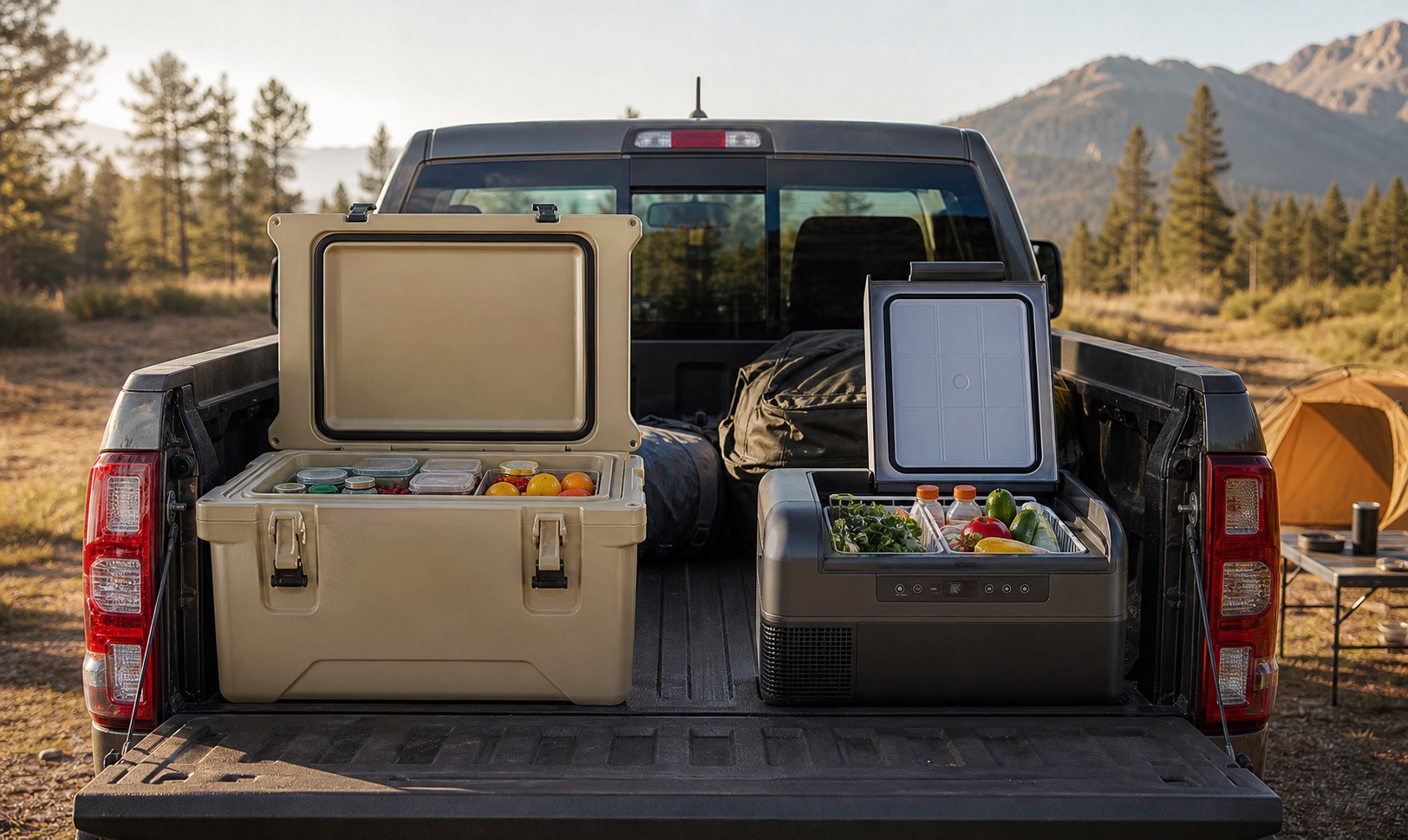
A cooler is simpler and often better for short trips. A portable fridge earns its space when you take longer trips, manage a reliable power system, and value consistent temperature control over simplicity.
The cooler case is stronger than it looks
A quality cooler paired with thoughtful meal planning remains a practical option for one and two night trips. It has no electrical demand, is easy to move, and works with an ice strategy. The tradeoff is melting ice, less precise temperature control, and the need to manage food separation.
For beginners, a cooler helps establish how much food you carry and how much cold storage you actually need before committing to a powered system.
- Best for short trips and simple meal plans.
- Use block ice or frozen water bottles to reduce mess.
- Pack food in sealed containers and limit lid open time.
A fridge changes the whole system
A portable compressor fridge can make multi day food storage easier and remove the recurring ice problem. It also becomes another electrical system to plan, secure, ventilate, and monitor. The fridge is only as useful as the power plan behind it.
Before buying one, confirm its external dimensions, lid clearance, tie down approach, current draw, and how it will recharge between drives. A fridge that blocks your bed access or drains the battery is not a convenience.
- Confirm the unit fits with room for ventilation and lid opening.
- Estimate daily energy use at realistic ambient temperatures.
- Plan a secure 12 volt connection and a backup food strategy.
Choose by trip pattern
Use a cooler when you mostly camp for a night or two, do not need frozen food, and prefer low complexity. Consider a portable fridge when you make longer trips, travel in warm weather, often keep food in the vehicle, and already have dependable power management.
Neither option is automatically more overland. The right choice protects food, fits the vehicle, and keeps your packing routine manageable.
- One night trips: cooler first.
- Two nights with moderate weather: compare cooler capacity and ice logistics.
- Longer, hotter, or more frequent trips: evaluate a fridge with a verified power budget.
Do not forget food safety
A cold storage product cannot replace safe food handling. Follow local food safety guidance, keep raw food contained, separate drinks from meal ingredients if frequent access is expected, and discard food if you cannot maintain a safe temperature.
A simple thermometer is useful whether you use ice or a powered unit. It gives you a decision point instead of a guess.
- Pre chill the cooler or fridge before loading it.
- Use separate containers for raw meat and ready to eat food.
- Keep an eye on temperature rather than relying on ice appearance alone.