Bottom line
For a first trip, prioritize shelter, sleep, water, food, lighting, navigation, and a way to handle a flat tire. Skip the impressive looking extras until a real trip shows you the gap.
Start with a small trip
Your first overlanding trip does not need to prove anything. Pick a one or two night route within a comfortable drive of fuel, cell service, and a backup campground. The goal is to learn what you use, what takes too much room, and what needs a better system.
Build your packing list around functions rather than product categories. A costly accessory does not solve a problem if you still cannot sleep well, make dinner, or air a tire back up.
- Choose a route with a legal, confirmed overnight option.
- Tell someone your route and return window.
- Check weather, road conditions, fire restrictions, and local rules before leaving.
The seven non negotiable systems
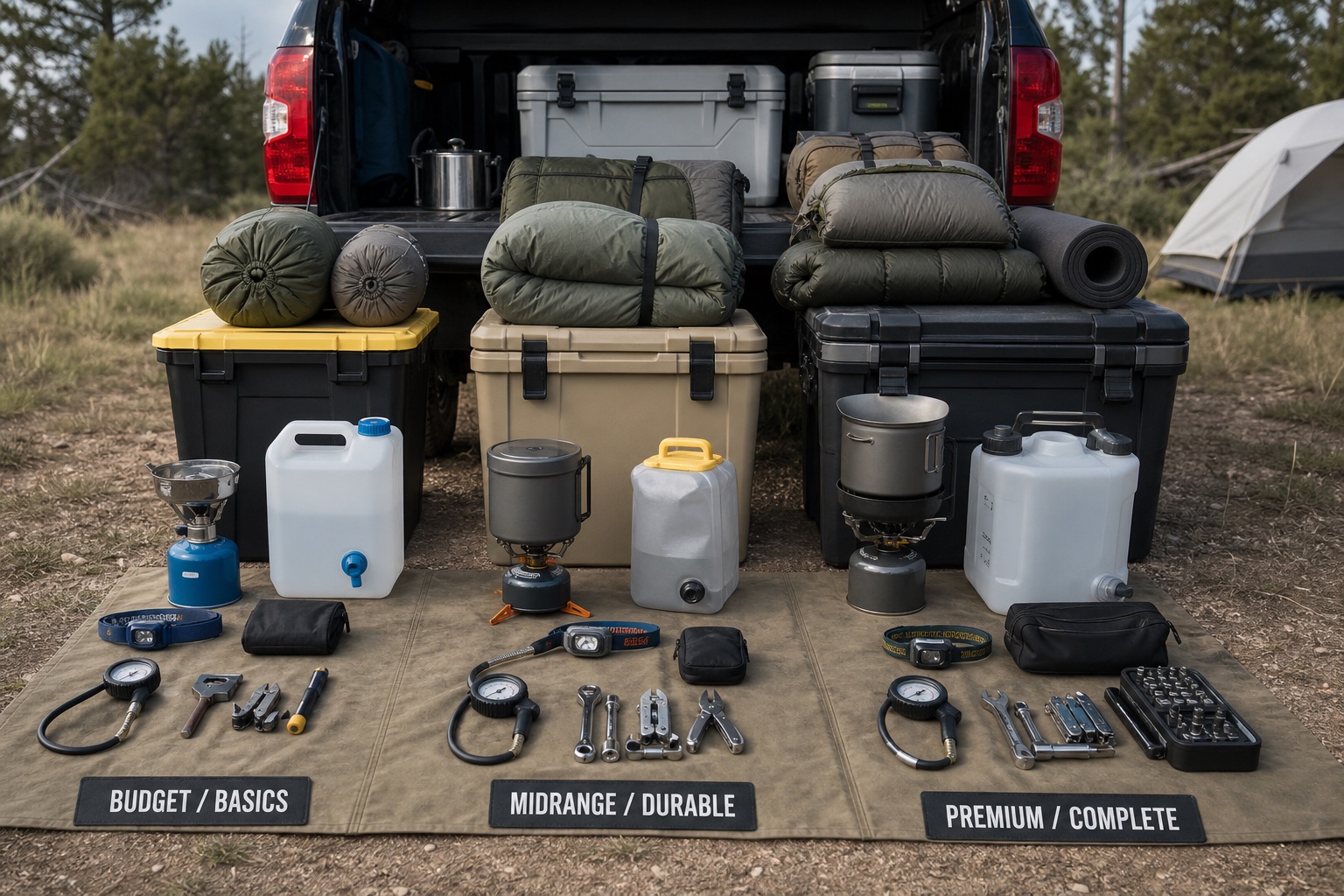
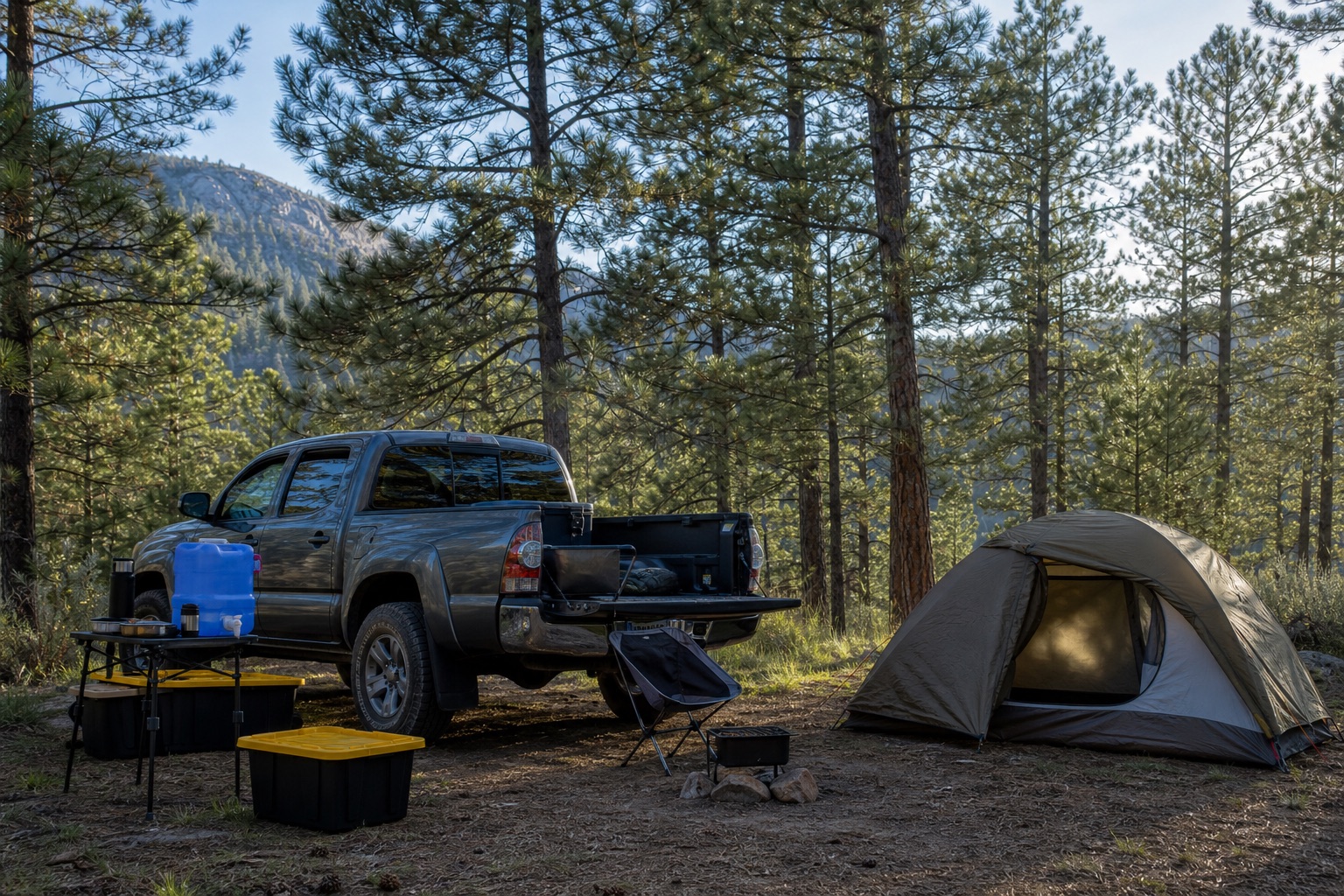
Think in systems: sleep and shelter, water, food and cooking, lighting, vehicle readiness, navigation and communication, and basic first aid. Each can begin with ordinary camping gear. The truck is the transport and storage platform, not a reason to buy every truck specific product.
- Sleep: tent or vehicle sleeping setup, pad, bag or quilt, and a warm layer.
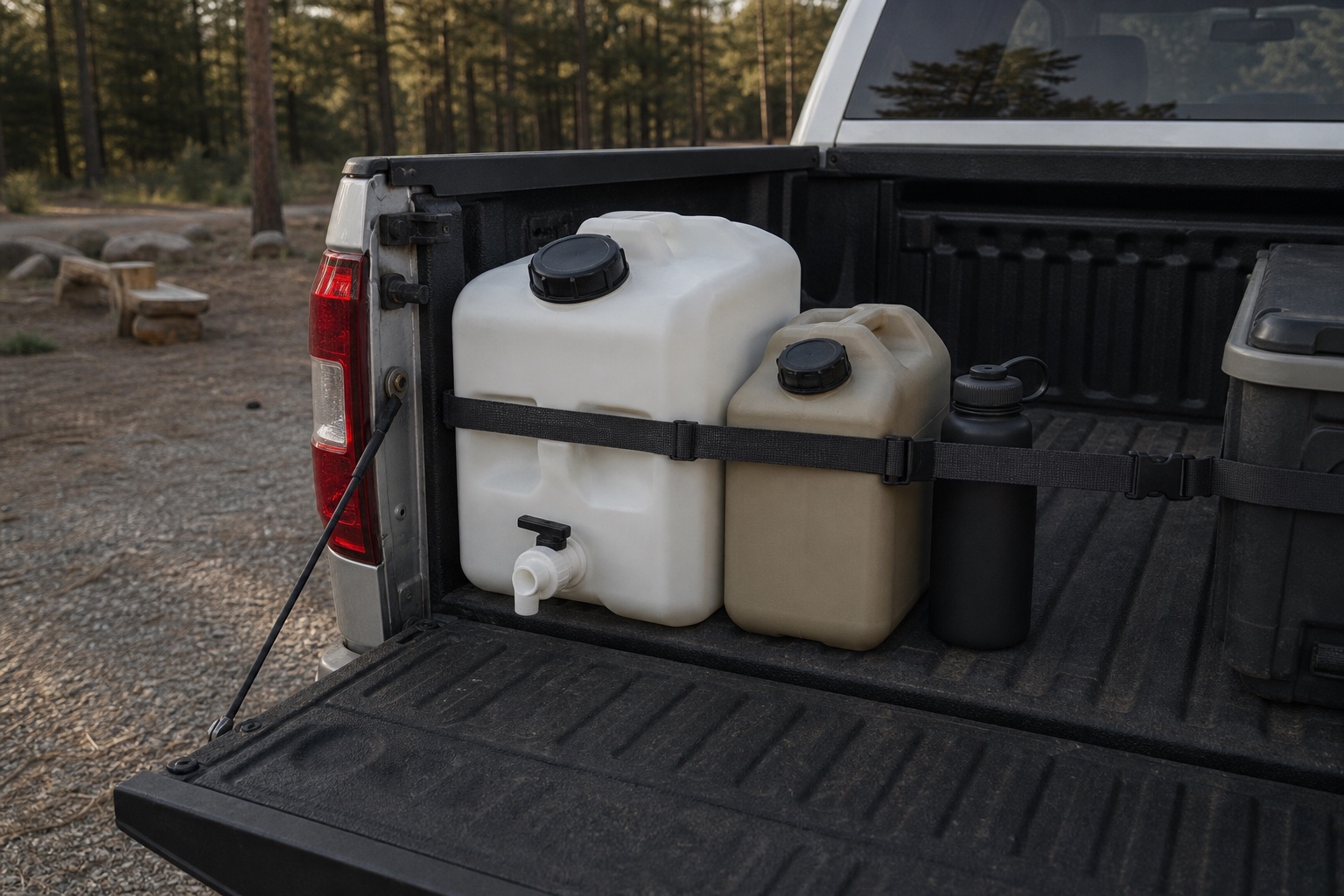
- Water: more than you expect to drink, plus a simple way to wash hands and dishes.
- Food: cooler, stove if needed, fuel, utensils, and a low mess meal plan.
- Lighting: headlamp for each person plus a camp light.
- Vehicle: spare tire, jack, lug wrench, tire gauge, and a basic tool kit.
- Navigation: offline map, route notes, and a charged phone battery.
- Safety: first aid kit, weather layers, and a vehicle appropriate extinguisher.
Pack for access, not just volume
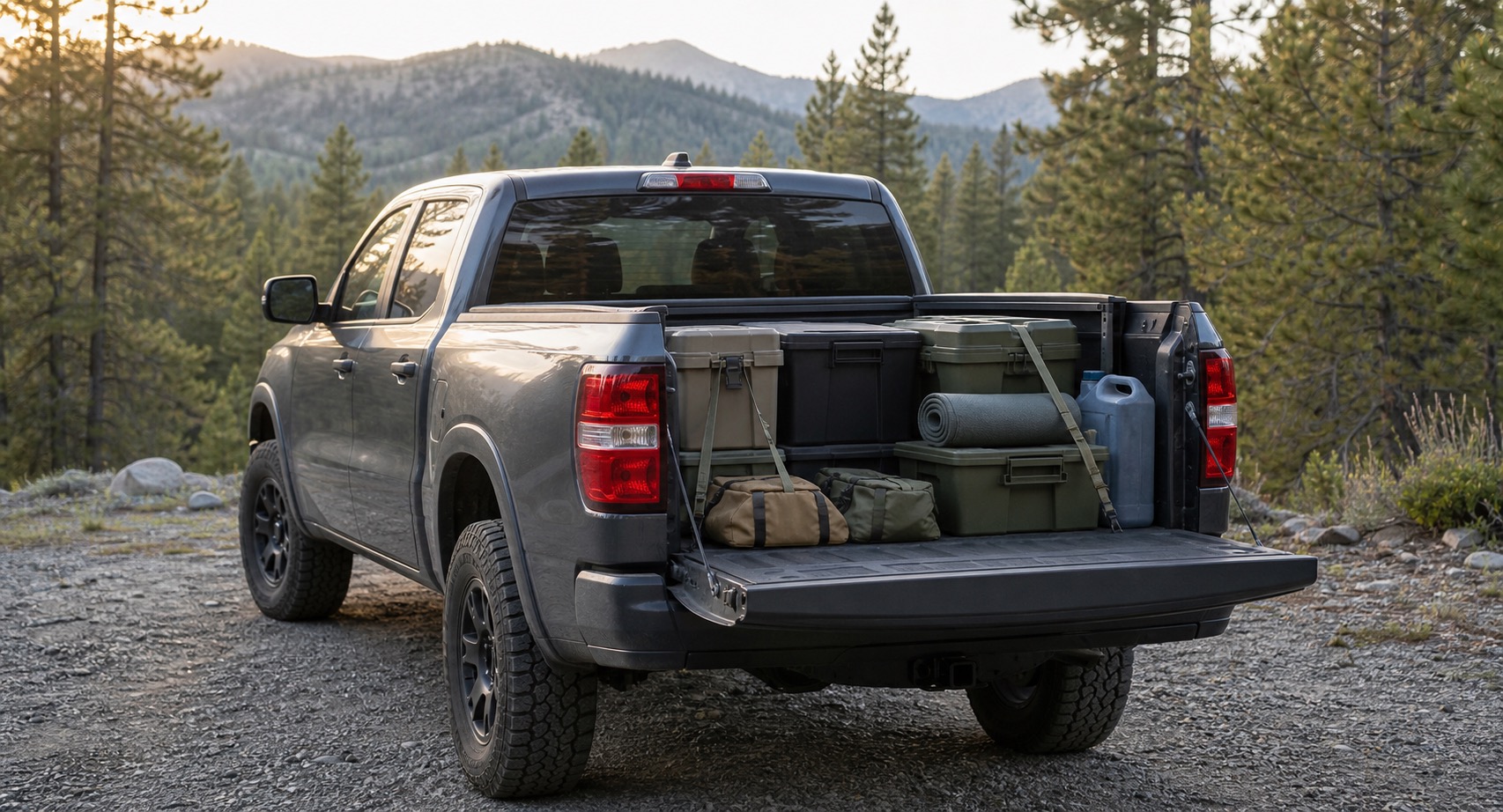
A disorganized truck creates friction every time you stop. Put the items you use first at the tailgate or hatch: snacks, water, rain layer, headlamp, first aid kit, and camp kitchen. Heavy items belong low and close to the cab or axle line when possible.
Use bins, soft bags, or existing drawers before committing to a permanent storage build. Your first few trips will tell you where the real pain points are.
- Keep recovery and tire items together in one labeled bag.
- Keep food sealed from dust, moisture, and wildlife.
- Do not bury your sleeping kit under kitchen gear.
What can wait
Rooftop tents, 12 volt fridges, bed racks, drawer systems, solar arrays, and high output lighting all have valid uses. They are not entry tickets. Buy them after you can describe the specific inconvenience they solve on your own trips.
A modest setup that is comfortable, safe, and easy to pack gets used more often than an elaborate build that requires an hour of preparation.