Bottom line
Choose a ground tent when you want a flexible basecamp, simple vehicle use, and a lower commitment. Consider a rooftop tent when you move camp often, value an integrated sleep setup, and can verify every vehicle, rack, and tent requirement.
Start with how the weekend moves
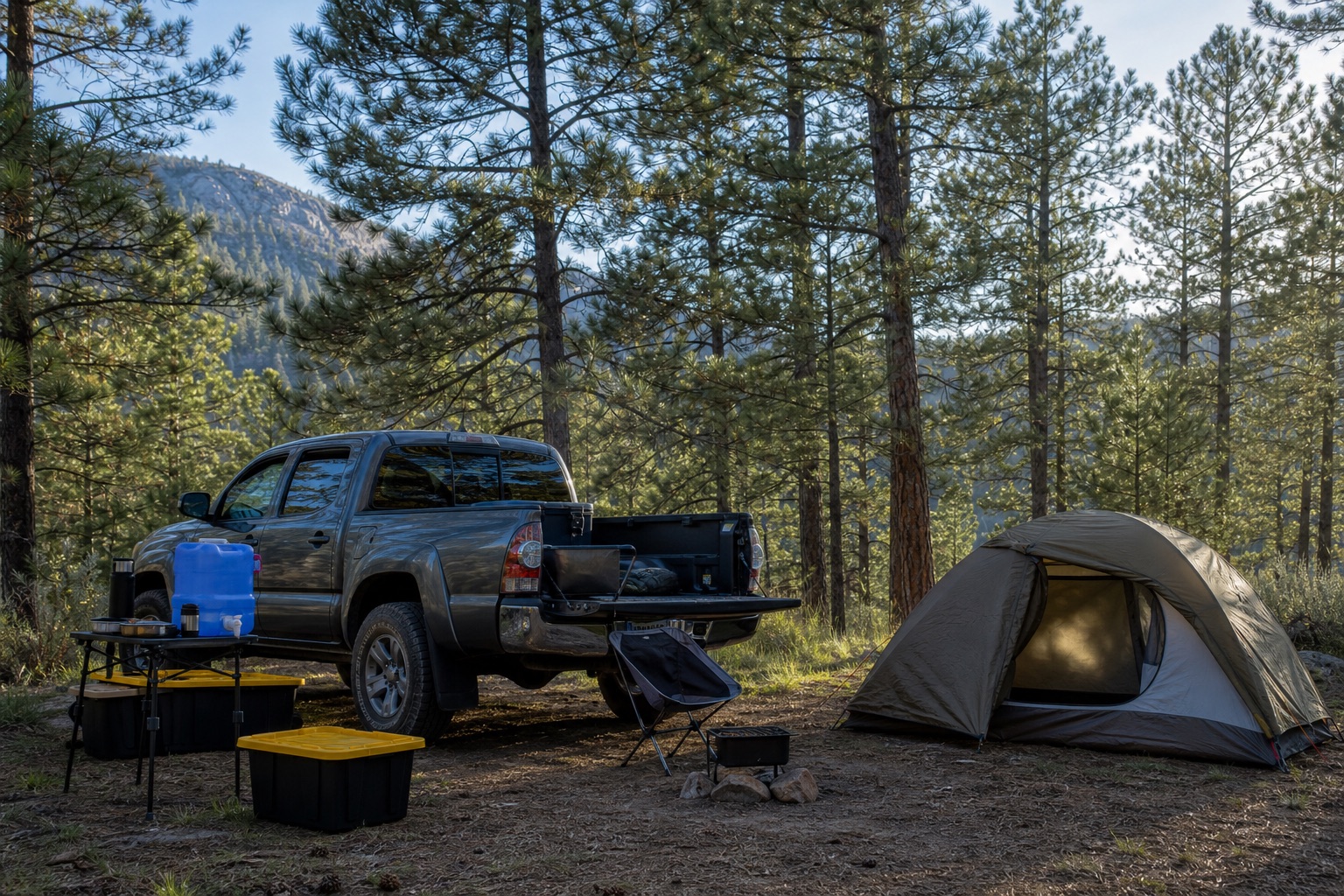
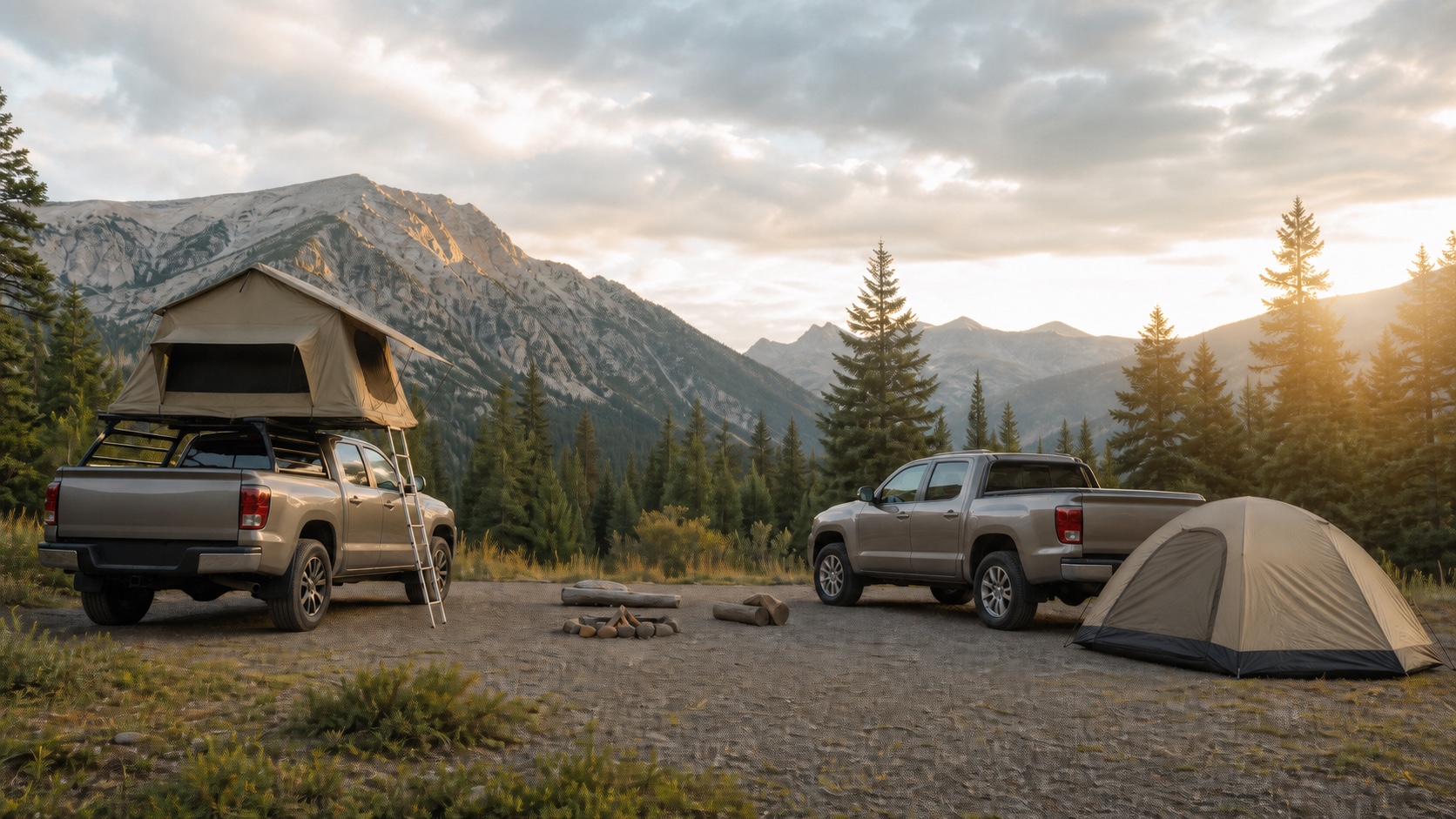
The strongest difference appears after camp is set. A ground tent can stay at the campsite while the truck carries you to a trailhead, town, or scenic road. A rooftop tent normally needs to close before the vehicle moves. That makes the ground tent a natural fit for a basecamp weekend and the rooftop tent a stronger candidate for a route that changes camp each night.
Do not choose by setup time alone. Count the complete routine from parking to sleep and back to driving. A quick opening rooftop tent can still require careful leveling, ladder placement, bedding management, and a full close before a morning drive. A familiar ground tent may take longer to pitch, but it lets the rest of camp remain settled while the vehicle leaves.
- Choose a ground tent when day trips from one campsite are central to the plan.
- Consider a rooftop tent when most mornings already involve packing the entire camp.
- Skip either option if its daily routine feels too awkward to repeat in rain or darkness.
Treat the rooftop option as a complete system
A rooftop tent is not only a tent. It is a chain that includes the vehicle roof or bed structure, mounting points, rack feet, crossbars, tent mounting hardware, and the tent itself. Thule guidance separates the vehicle roof limit from the rack rating and calls the limit used while driving the dynamic capacity. It also notes that the lowest rated rack component determines the rack system capacity.
Verify each part with the current manuals for the exact vehicle, rack, and tent. Confirm that the rack is approved for rooftop tent use, that the mounting interface fits the crossbars, and that the required crossbar spacing is possible. Do not apply a universal static to dynamic multiplier. A ratio published for one rack family is not a rule for another rack or vehicle.
- Check the vehicle roof or bed mounting guidance.
- Check the rack system and every load bearing component.
- Check tent weight, occupant limits, mounting hardware, and bar spacing.
- Skip the rooftop option when any rating or compatibility answer remains unclear.
Compare campsite fit and access
A ground tent needs a suitable patch of ground in addition to the parking space. The National Park Service advises finding a large, flat tent area and checking the whole campsite layout before setup. Frontcountry sites usually include a parking space, while the tent location remains a separate layout decision. Rocky surfaces, tight site boundaries, and rules about where tents belong can change the decision.
A rooftop tent uses the parked vehicle as its platform, so the parking position becomes the sleeping position. You need a place where the vehicle can sit level enough for the tent instructions, where the ladder can open without blocking traffic, and where everyone can enter safely. That can be convenient on compact sites, but it can also leave fewer options when the best parking spot is sloped or separate from the designated tent area.
- Check the campground rules and site layout before the trip.
- Measure the ground tent footprint with its lines and entry space.
- Think through ladder access for children, pets, or anyone with limited mobility.
- Keep entrances and lines away from common walking paths.
Separate comfort from shelter height
Sleeping above the ground does not automatically make a shelter more comfortable. Rooftop tents often package a mattress and platform together, which can simplify one part of packing. The tradeoff is that the mattress dimensions, firmness, ventilation, and access are tied to that tent design. Bedding may also need to fit inside the closed shell or return to the vehicle.
A ground tent lets you choose the shelter and sleeping pad separately. The National Park Service notes that stated tent capacity describes sleeping room, not extra room for gear or pets. Weekend travelers who want wider pads, cots, indoor gear storage, or easy pet access should compare usable floor dimensions rather than relying on the person count alone. A larger ground tent brings more packed bulk and can demand a larger site, so extra space is useful only when the truck and campsite can absorb it.
- Compare the actual sleep surface for every person.
- Plan where shoes, wet layers, and bedding go.
- Choose ground level access when ladders would create daily friction.
- Avoid buying more interior room than the campsite and cargo plan can support.
Account for storage and vehicle duties
A rooftop tent moves a large part of the sleep system out of the truck bed, but its weight still counts in the vehicle load. It may also occupy roof or bed rack space that could hold other cargo. If it stays mounted between trips, the vehicle carries that commitment during errands, commuting, garage entry, and every other use. Removal can return flexibility, though the tent then needs a safe storage place and a practical lifting plan.
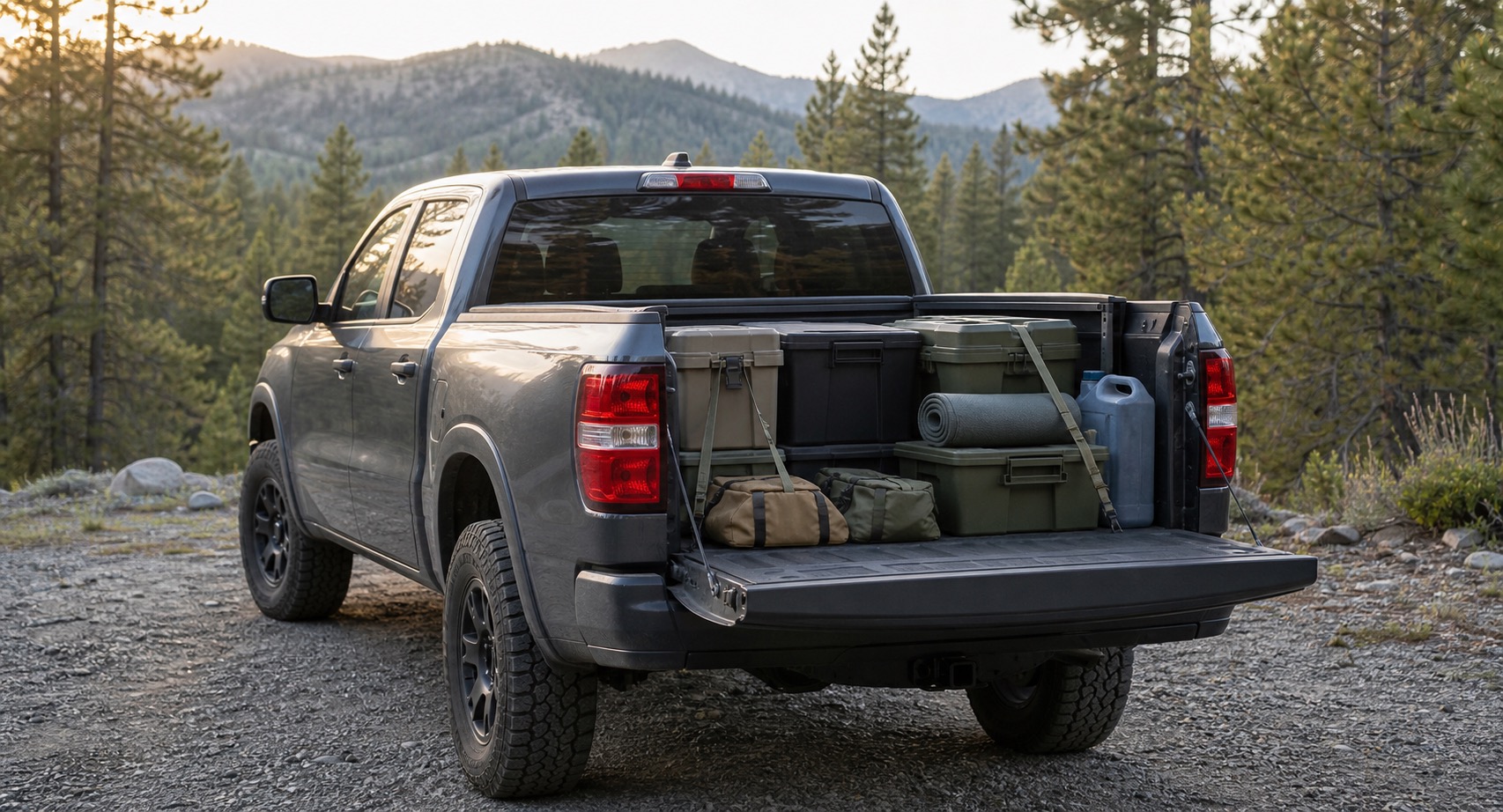
A ground tent travels inside the vehicle and competes directly with food, water, recovery equipment, and clothing. It is easier to move between vehicles and easier to leave at home when the trip does not need it. Use the storage approach in the midsize truck guide to keep the shelter accessible without burying safety gear, and compare the complete packed volume rather than the tent bag alone.
- Count the shelter, rack, bedding, ladder, and mounting parts in the load plan.
- Confirm garage and trail clearance with the rooftop system closed.
- Choose a ground tent when the same shelter must serve several vehicles.
- Skip a permanent rooftop setup when the truck often needs an open bed or roof.
Compare total cost and commitment
A ground tent usually asks for fewer vehicle specific components. The basic system is the tent, stakes or supports, a ground layer when recommended, and the sleep setup. That makes it easier to start with gear you already own, borrow a shelter, or replace one part without changing the vehicle.
The rooftop system cost includes more than the tent. A compatible rack, mounting parts, installation, removal, storage, and any help needed to lift the unit all belong in the decision. The higher commitment can be worthwhile when its routine matches frequent travel, but it is poor value when the tent remains mounted mainly because removal is difficult. Compare the full first year system, not a tent price viewed in isolation.
- Use a ground tent first when the trip pattern is still changing.
- Rent or borrow both styles when possible before a major purchase.
- Consider a rooftop tent only after compatibility and storage plans are complete.
- Spend on reliable weather protection and fit before convenience features.
Use a simple decision path
Choose the ground tent when your ideal weekend establishes one camp, uses the truck during the day, needs easy entry, or keeps the vehicle free for daily duties. Choose it too when budget, shared vehicle use, uncertain trip habits, or changing passenger counts argue for flexibility. The setup may take more separate pieces, but each part can evolve without rebuilding the truck.
Consider the rooftop tent when you move most nights, already own a verified compatible rack system, can manage the ladder comfortably, and have a sensible plan for storage or permanent carrying. Its integrated platform can reduce some ground setup decisions, but it should solve a repeated trip problem rather than act as the starting requirement for overlanding.
- Write down where the truck goes after camp is set.
- List every setup and packing action for each shelter.
- Verify the full load and compatibility chain.
- Try the preferred routine on a simple local weekend.
- Buy only after the same shelter problem appears more than once.