Bottom line
Build water storage around the people, conditions, camp tasks, and refill plan for this trip. Two manageable containers usually offer more flexibility than one oversized tank, while a separate clean reserve protects the most important part of the supply.
Plan the water job before the container
There is no useful universal container size for every weekend. Start with the trip: number of travelers, pets, weather, activity, meals, hygiene, distance from a verified refill, and the consequences if that refill is unavailable. Estimate drinking and cooking separately from dishwashing and other camp use so convenience water does not quietly consume the clean reserve.
Published quantities can help as location specific planning references, but they cannot replace current destination guidance. Heat, strenuous activity, medical needs, pets, and a dry campsite can all change the plan. Confirm available water with the land manager shortly before departure and carry enough margin for a delay or failed refill. If the route depends on untreated surface water, research that separate safety problem instead of assuming a storage container makes the source safe.
- List every person and pet on the trip.
- Separate drinking and cooking from other camp tasks.
- Verify refill locations and current destination conditions.
- Add a reserve that is not already assigned to a routine task.
Choose a modular container mix
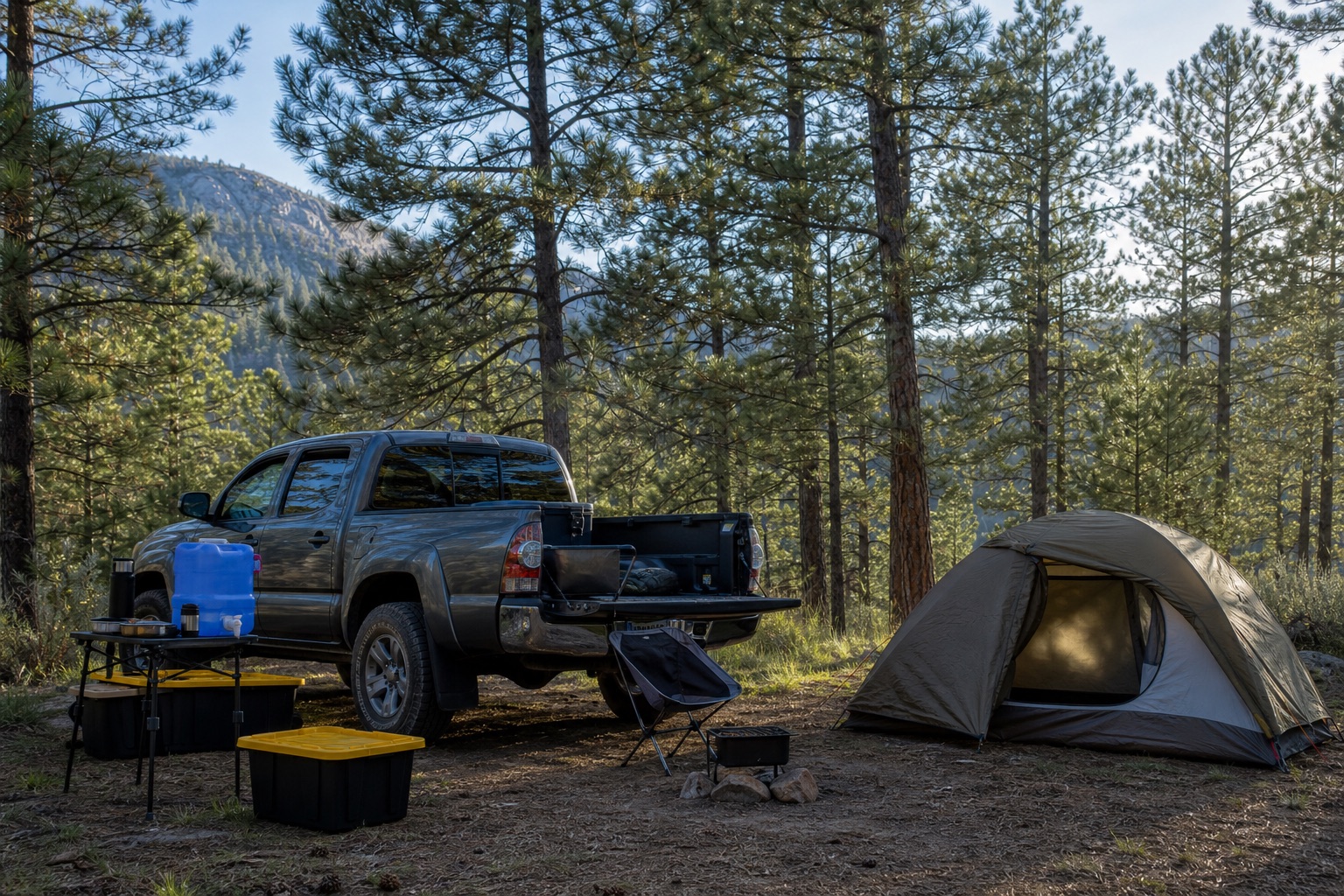
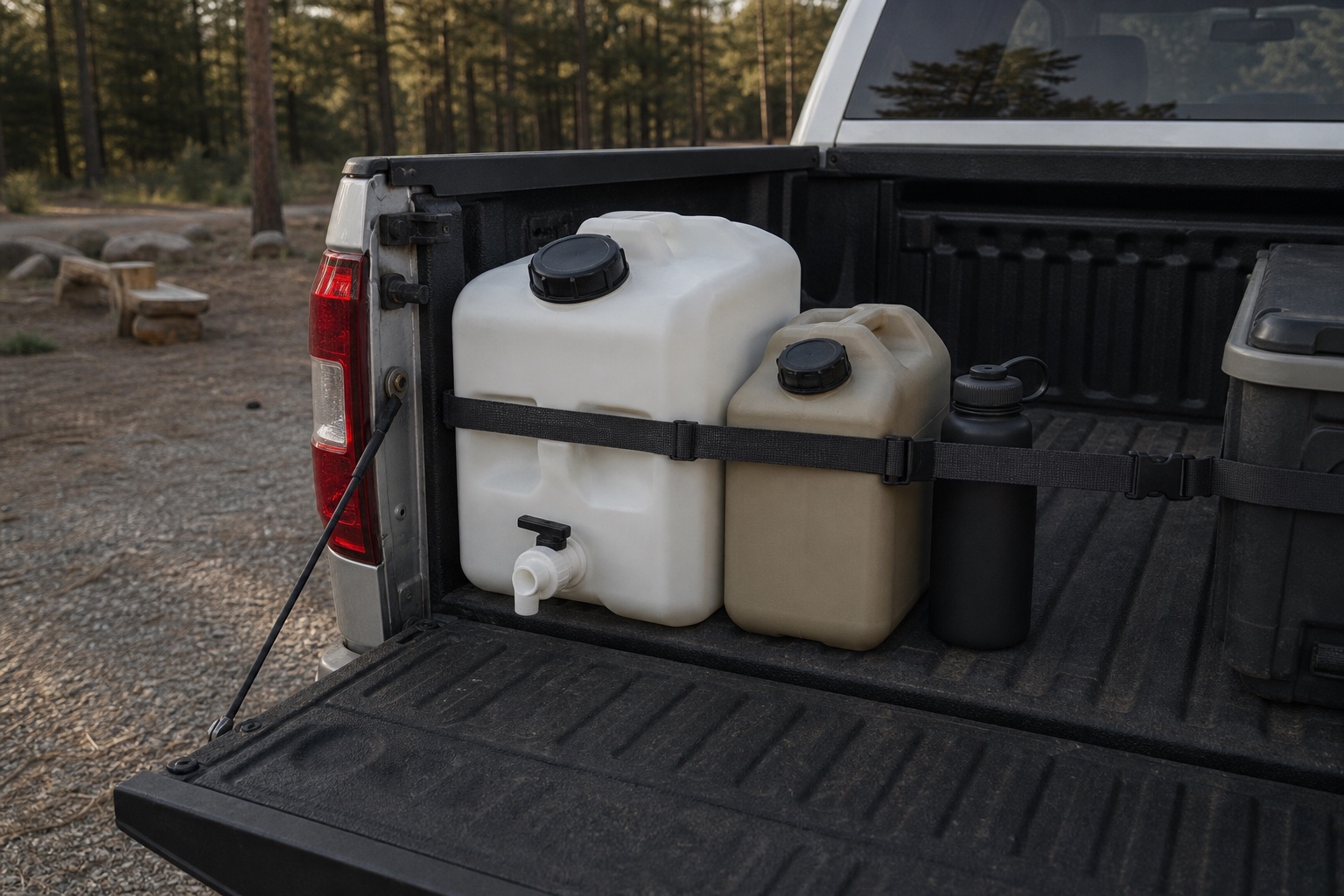
A modular system uses two or more manageable containers rather than forcing every trip into one large tank. One container can serve active camp use while another stays closed as a reserve. Personal bottles handle daily access without opening the main supply repeatedly. The mix can shrink for a mild overnight near services or grow for a hotter trip with no dependable refill.
Hard sided jugs generally protect their shape and work well with simple spigots, but they occupy the same cargo space when empty. National Park Service camping guidance notes that collapsible jugs save space at a durability tradeoff. A soft container can be useful after camp is established, yet it is a weaker default where abrasion, sharp cargo, or difficult restraint is likely. Skip a very large container when one person cannot safely move it or when the vehicle lacks a clear secure position.
- Use one manageable main container for ordinary camp access.
- Keep a second container closed as a reserve.
- Give each traveler a refillable bottle for daily use.
- Choose collapsible capacity only when its protection and restraint are convincing.
Protect the clean reserve
Container material and history matter more than an adventurous appearance. CDC recommends food grade water storage containers. Its alternative criteria include a tight closure, durable non glass material, and preferably a narrow opening that supports pouring. Use containers dedicated to potable water and confirm uncertain material claims with the maker before relying on them.
Keep the reserve closed until it is needed. Store it away from fuel, cleaners, and other toxic substances, and protect it from direct sun as the trip layout allows. This separation limits the number of caps, hands, utensils, and dusty camp surfaces that reach the backup supply. A small failure in the active container then becomes an inconvenience rather than the loss of every drop.
- Confirm that the container is intended for potable water.
- Inspect the cap, seal, body, and dispensing fitting before filling.
- Keep the reserve away from fuel and chemical storage.
- Label drinking water clearly and record when it was filled.
Match dispensing to the real task
The simplest useful dispenser is often a gravity spigot positioned where a cup or pot fits beneath it. It uses no battery, reveals leaks quickly, and limits the need to tip a heavy container. The tradeoff is that the container must be raised or placed near an edge, so the final position still needs stable support and secure storage before driving.
A manual or electric pump can improve access when the container stays low or serves repeated kitchen tasks. It also adds tubing, seals, cleaning work, power needs, and another possible failure. Pay for that complexity when it solves a repeated access problem. Skip it when a basic spigot pours cleanly, when the pump cannot be cleaned according to its instructions, or when loose tubing would complicate packing. Keep one bottle or simple pour option that still works if the primary dispenser fails.
- Test the flow with the container in its actual camp position.
- Check for leaks before the container enters the vehicle.
- Keep dispensing parts clean and capped during transport.
- Retain a simple backup way to reach the reserve.
Clean and handle the system deliberately
A new looking container is not automatically ready for drinking water. CDC instructs readers to wash and sanitize refillable storage containers before use, then fill them with clean water and close them tightly. Follow the current public health directions and the container maker instructions rather than inventing a stronger mixture or shortening the process. Recheck the guidance when a stored container returns to service after a long gap.
At camp, avoid touching the water or the inside of the container. Use a clean dispensing part or utensil and protect openings from dust. A wide opening can make scrubbing and inspection easier, while a narrow opening can reduce hand contact and support controlled pouring. Neither design wins every use. Choose the one you can clean completely and dispense from without improvisation.
- Clean and sanitize before filling for storage.
- Use clean water and close the cap tightly.
- Keep hands and dirty utensils out of the container.
- Dry and inspect every part before packing the system away.
Pack water as heavy cargo
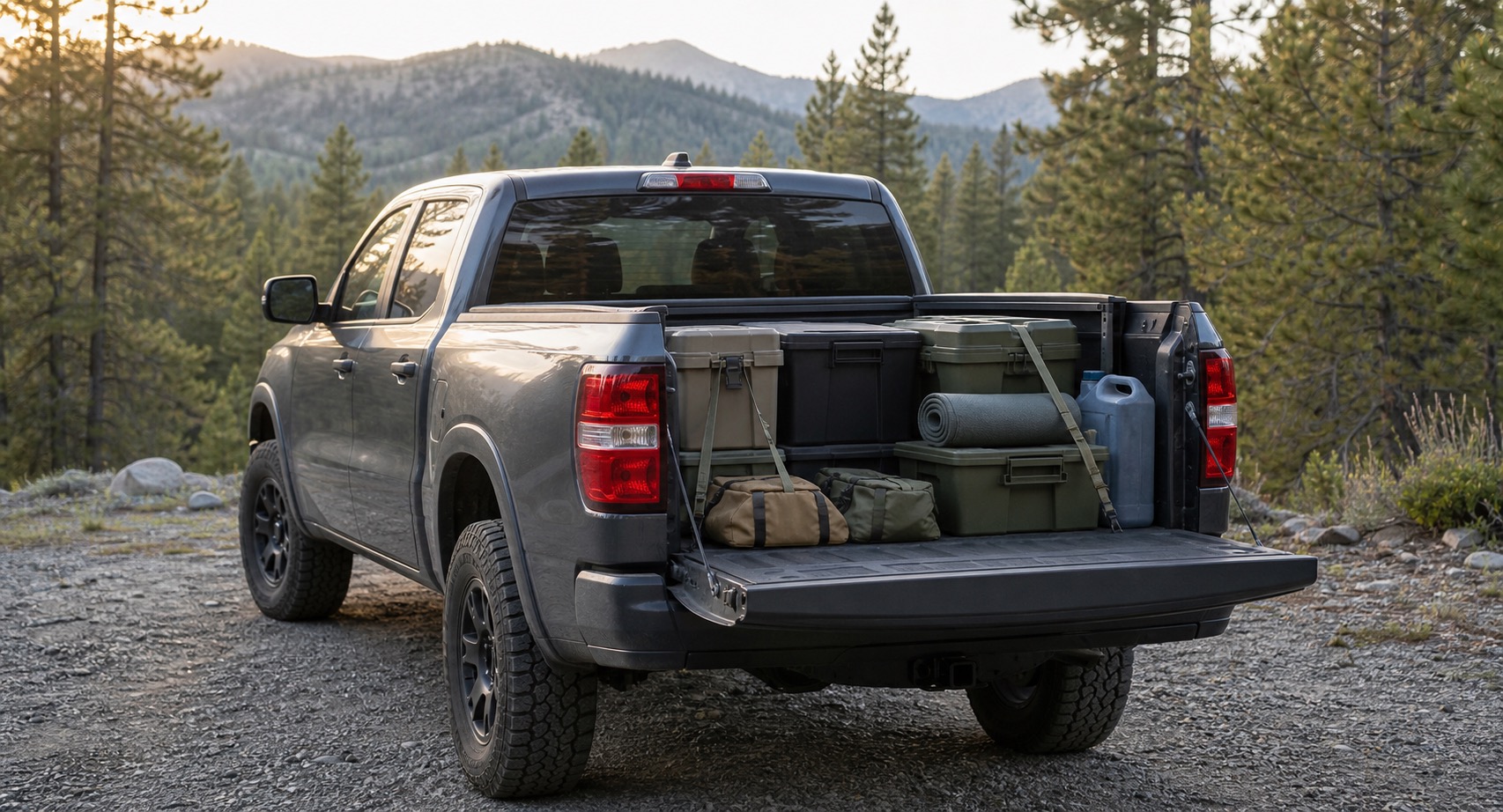
Water becomes a major part of a weekend load faster than its container size suggests. Guadalupe Mountains National Park uses approximately eight pounds per gallon as a planning reference. Count the filled weight of every jug, bottle, and fixed accessory in the vehicle load rather than estimating only the empty container. If the total crowds people, essential gear, or vehicle capacity, reduce other cargo or choose a more conservative trip plan.
Give each filled container a defined position supported by vehicle specific guidance and real attachment points. A low position can make a dense container easier to integrate, but low is not a substitute for secure. NHTSA advises drivers to restrain cargo, avoid excessive loads, and check the load again before driving. Confirm that a container cannot slide, tip, leak, or leave the vehicle during sudden braking and rough travel. Inspect the restraint after a short drive because soft cargo and straps can settle.
- Count water at roughly eight pounds per gallon for planning.
- Include the container, rack, pump, and hardware in the load.
- Use vehicle appropriate restraints and attachment points.
- Stop early in the drive and check the load again.
Spend by consequence, not appearance
A budget setup can be a pair of verified food grade jugs, a simple spigot, and personal bottles. It suits occasional weekends near reliable services when the caps seal, the containers can be cleaned, and the vehicle can secure them. Avoid saving money with unknown plastic, damaged seals, or a shape that cannot be restrained.
Midrange value often comes from easier cleaning, replaceable seals, a dependable dispenser, and sizes one person can handle. Premium tanks, powered pumps, level monitoring, and permanent plumbing earn consideration only after repeated trips expose a real need. They add installation, weight, maintenance, and less flexible cargo space. Skip a permanent system when the vehicle still serves daily duties, trip length varies, or two modular containers already solve access and reserve needs.
- Budget for simple capacity with verified materials and sound closures.
- Choose midrange when serviceable parts and easy handling reduce repeated friction.
- Pay more only for a specific access, durability, or capacity problem.
- Keep the setup modular while the trip pattern is still changing.