Bottom line
Size power from the devices you actually run and the hours they run. A small station may be enough for phones and lights. A compressor, fridge, or heated gear requires a more deliberate plan.
Begin with the load, not the battery
Portable power stations are convenient, but their capacity number is only useful when you understand the equipment attached to them. Make a list of every device, its typical watts or watt hours, and how long it runs. Add a buffer for conversion losses and cold weather.
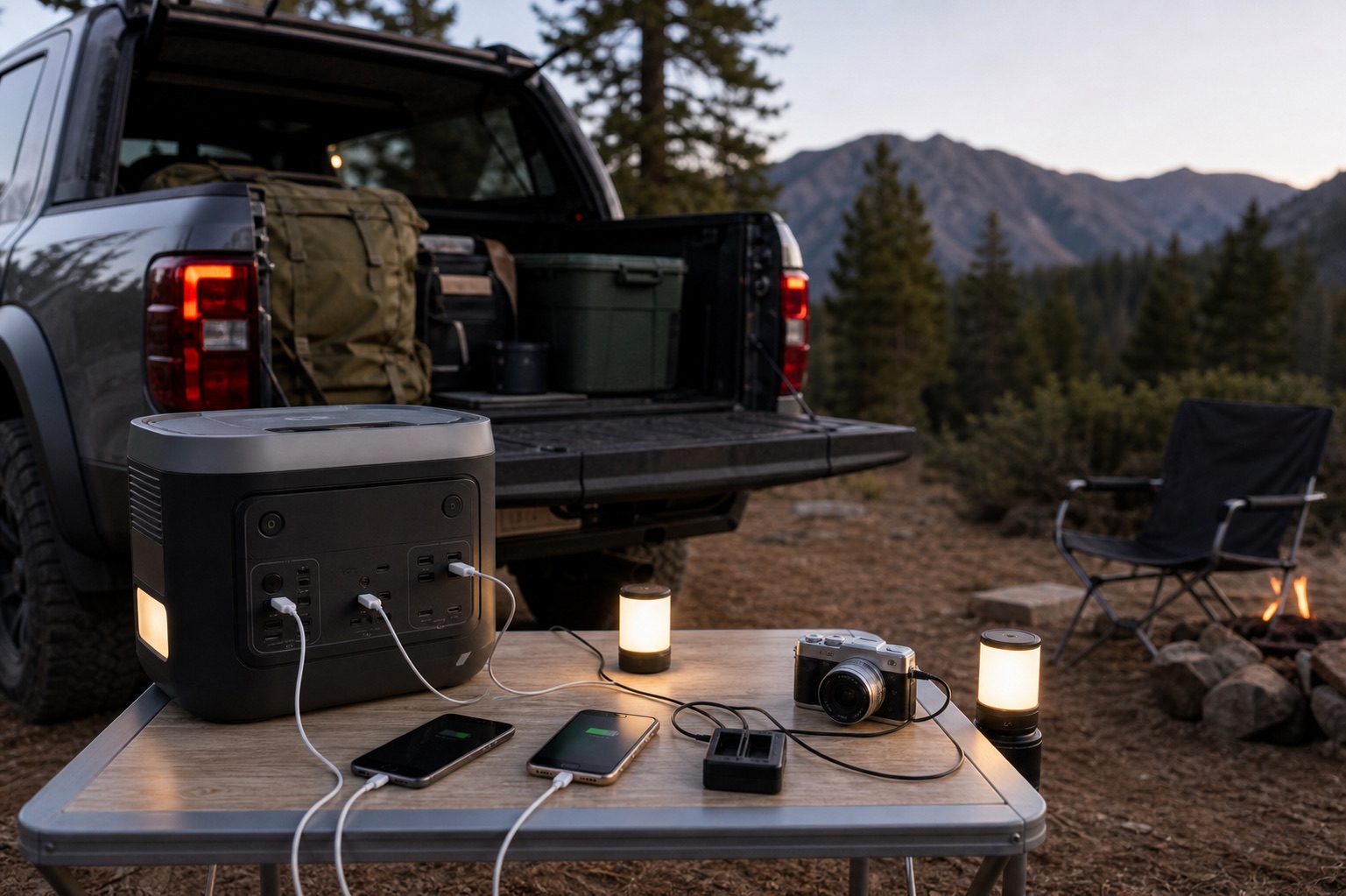
For a simple weekend, phones, headlamps, a camera, and a few LED lights may need very little energy. A compressor, electric cooler, cooking appliance, or laptop heavy work setup changes the math quickly.
- List each device and its expected use per day.
- Separate continuous loads from occasional high draw loads.
- Check both battery capacity and the station’s output limits.
Understand the terms that matter
Watt hours describe stored energy. Watts describe the rate of power draw. A 500 watt hour station does not necessarily run a 500 watt appliance for a full hour because inverter losses and operating conditions matter. AC outlets also introduce conversion loss, so use DC or USB output directly when the device supports it.
Charging input matters too. A station that recharges from the vehicle only slowly may not recover between driving days. Check the actual charging profile and your vehicle’s available outlets before assuming an alternator will solve the problem.
- Capacity: total stored energy, usually expressed in watt hours.
- Output: maximum power the station can supply at once.
- Input: recharging rate from vehicle, shore power, or solar.
- Chemistry and temperature: factors that affect usable capacity and storage guidance.
Match the plan to the trip
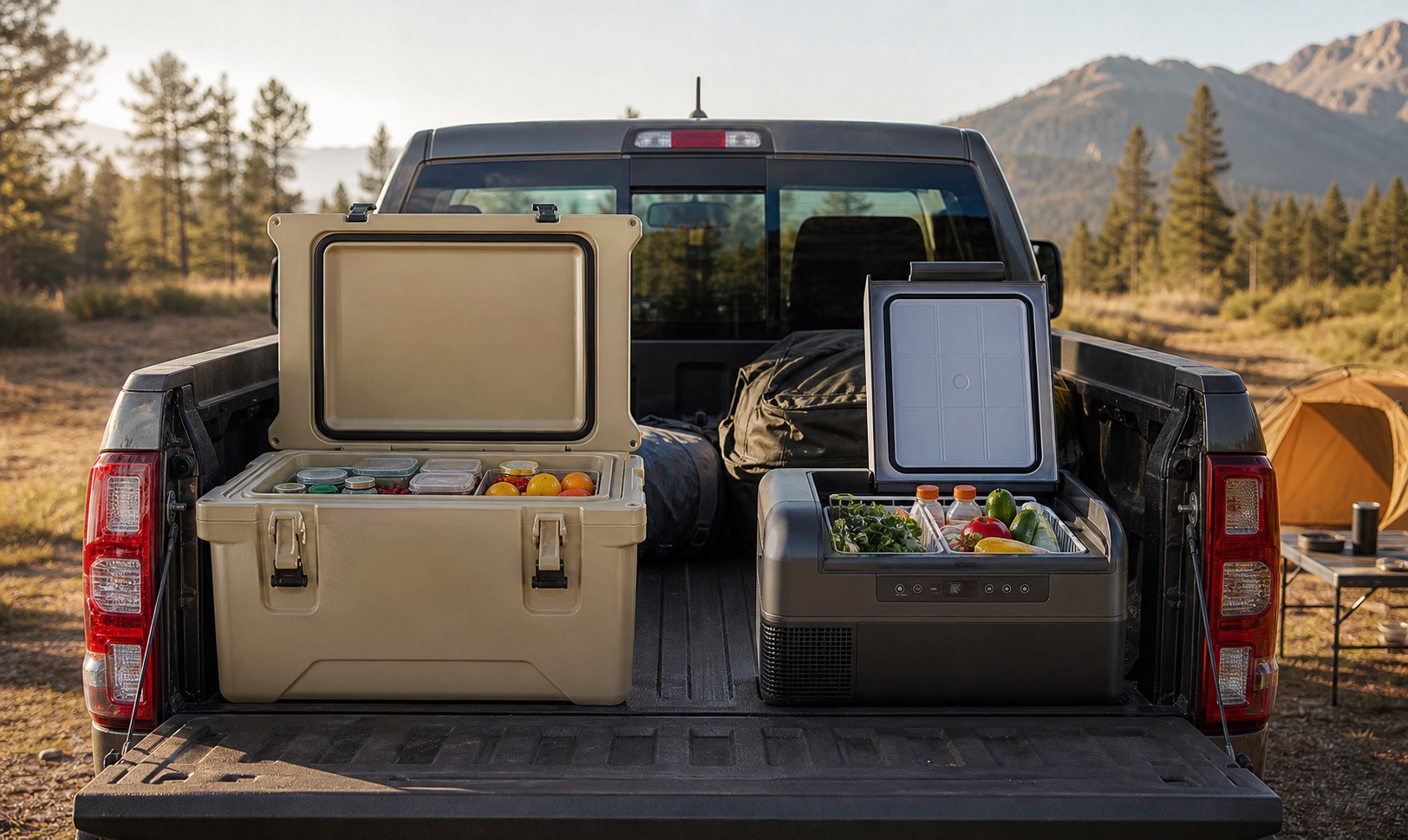
For occasional one night trips, a modest unit may be a clean way to keep personal electronics organized. For two or more nights with a 12 volt fridge, build a real budget that includes daily consumption, recharge time, cable routing, and weather. The goal is not to own the largest unit. It is to finish the trip with a reasonable margin.
Keep high draw vehicle tasks separate from camp convenience where possible. A tire compressor can draw heavily and its compatibility with a portable station should be verified rather than assumed.
- Short trip: phone, lights, camera, and small electronics.
- Weekend basecamp: add fridge planning and a vehicle recharge plan.
- Remote or cold weather trip: add more margin and conservative assumptions.
Avoid power plan surprises
Measure real usage on a local trip before relying on the system remotely. Route cables so they do not pinch in doors or cross hot exhaust components, secure the station for travel, and read the manufacturer instructions for ventilation and storage.
Power is helpful, but it should not obscure simpler solutions. Efficient lights, insulated food storage, charged battery banks, and shorter device use all reduce the size and cost of the system you need.
- Do a driveway test with your actual devices.
- Keep a backup headlamp and offline navigation independent of the power station.
- Never treat an untested electrical setup as emergency equipment.